What Happens at Musical Theatre Callbacks?
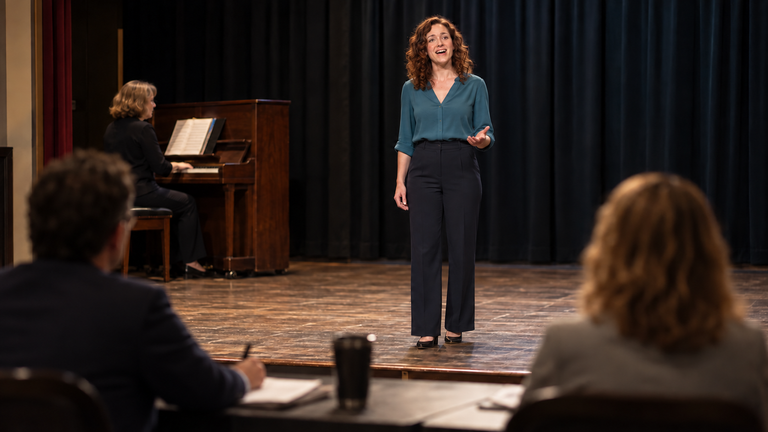
At your initial audition for a show, you usually get to choose your performance material and rehearse it to perfection ahead of time. Callbacks can be less predictable. You might be handed a scene to read, taught part of a song then asked to perform it, paired with someone you’ve never met, or asked to learn choreography with a room full of other performers.

Despite the stress of the unknown, a callback is always a good thing! The casting team saw something in you, and they want to see more. They are gathering more information about how you’d fit into their production.
Here’s what musical theatre callbacks can involve, how to prepare for each segment, and how to handle the pieces you can’t rehearse ahead of time.
What is a callback?
A callback is an invitation to audition again so the team can see or hear more from you. They may be considering you for a specific character, several roles, or the ensemble. They may also want to hear voices together or test out potential scene partners.
If you only sang in the initial audition, you will likely be asked to read scenes or dance, if the show has dance numbers. Different people may be called back for different things, with some asked to read, some to dance, some to sing again, or any combination of the three.
What does a callback mean?
Getting called back is encouraging, but it isn’t a casting offer. There’s no guarantee that you will be included in the final cast list. This is an additional chance to show that you’re right for the show, as well as being reliable and easy to work with (don’t forget that those things are important, too!).
And not getting a callback doesn’t always mean you’re out. Yes, it can be hard to believe the director when they inevitably say, “If you aren’t called back, it doesn’t mean you won’t be cast.”
But sometimes that is true! Some shows cast certain roles from the initial audition and only hold callbacks for other roles. Wait for the company’s casting announcement or direct communication before assuming either outcome.
Singing at callbacks: working with music from the show
At a vocal callback, you may sing a selection assigned to a particular role, join a duet, or learn a harmony part to sing with a partner or group. This gives the music director a chance to hear how you handle the show’s actual music.
When you receive music in advance
Pay attention to the exact cut you’re directed to prepare. Learn the words, notes, rhythms, and entrances, and practice with any provided rehearsal track. A cast recording can help guide you, but check it against the supplied music, because arrangements and versions may differ.
Learn who the character is singing to and what they want in that moment. Bring that intention into the song without copying every gesture or vocal choice from a recorded performance.
Prepare every selection you’ve been assigned, even if one is for a role you hadn’t considered. Memorization isn’t usually an explicit requirement, but it will make you look good. It will show that you put time and effort into your preparation, and it will allow you to fully perform the piece, rather than looking down at the music.
When music is taught in the room
Listen closely while the music director teaches the excerpt. Mark your starting point, any repeated sections, and the melody or harmony line you’re assigned. If you’re unsure about an entrance or rhythm, ask the music director when there’s a break in the teaching.
Don’t forget to act! When music is being taught on the spot, it’s easy to focus just on the notes and lyrics, but be sure to find out who the character is and what’s happening in the song, and use that to inform your tone and emotion while performing.
Cold reads: acting with a script in your hand
A cold read is a scene performed with little or no preparation. Excerpts from a script are called “sides”. Some theatres send sides ahead of time; others hand you pages at callbacks. You may read with another auditioning actor or with someone from the production team.
Use your preparation time to understand the scene
If you have a few minutes with the pages, read the whole scene rather than only your lines. Identify:
- Who you’re playing and your relationship to the other character.
- What has just happened and what’s happening now.
- What you want from the other person.
- Where your character changes their approach or learns something new.
Mark your lines or cues so you can find your place quickly. If important context is missing, ask a short question such as, “Do they already know each other at this point?”
Stay connected to your partner
Hold the pages where you can glance at the other character, without hiding your face. Use a finger or thumb to track your place and look up when you can. If you need an extra second to find your line, stay in character — don’t break character to apologize or comment on being lost.
Listen while the other person speaks and let their delivery affect your response. React to them visually while they are speaking. This will set you apart, as many beginners focus solely on their own lines and miss making a connection with their acting partner.
Dance calls: learning and performing a combination
At a dance call, the choreographer commonly teaches a short sequence of steps, called a combination. You’ll practice it, often as a full group, then perform it in smaller groups for the team. Depending on the show, there may be a separate tap call or a more demanding combination for featured dancers.
Often, but not always, the choreographer will use a song from the show for the dance combo, so knowing the music ahead of time will be helpful.
Find a spot where you can see the choreographer, and pay close attention, because moves are usually taught quickly at a dance call. As you learn, connect movements to counts, lyrics, or landmarks in the music.
Use the teaching time to clarify details. “Which foot do we turn on?” is easier to answer than “Can we do all of it again?” When it’s your group’s turn to perform, make sure you’re visible, leave enough space between dancers, and perform at 100%.
If dancing isn’t your strongest skill
Give the combination an honest attempt and stay positive. Focus on the rhythm, the order of the steps, and the style the choreographer requests. If you forget a section, pick up the next movement you recognize and keep performing. Don’t forget facial expressions!
I’ve seen performers who really struggled with a dance call get cast in lead roles, so don’t ruin your chances of being cast by showing a negative attitude or giving up! There are plenty of successful performers who are not skilled dancers.
Additional tips for callbacks
Taking direction: make the next attempt different
The director may ask you to repeat a scene with a new intention or tactic. The music director might change the phrasing, or the choreographer might ask for a different style of movement. Adjusting to the direction lets the team see how flexible you are as a performer.
Listen to the whole note, take a moment, and apply it. Avoid explaining why you made your original choice unless they ask. If you don’t understand the instruction, ask for clarification before starting again.
Waiting, changing partners, and being asked to try another role
You may spend more time waiting than performing. Keep your pages handy, stay within hearing distance of whoever is calling names, and save loud conversation or singing for another time.
The team may change scene partners, hear the same excerpt several times, or ask you to try a character you weren’t called back for. Stay flexible and give 100% each time you perform.
What to wear and bring to callbacks
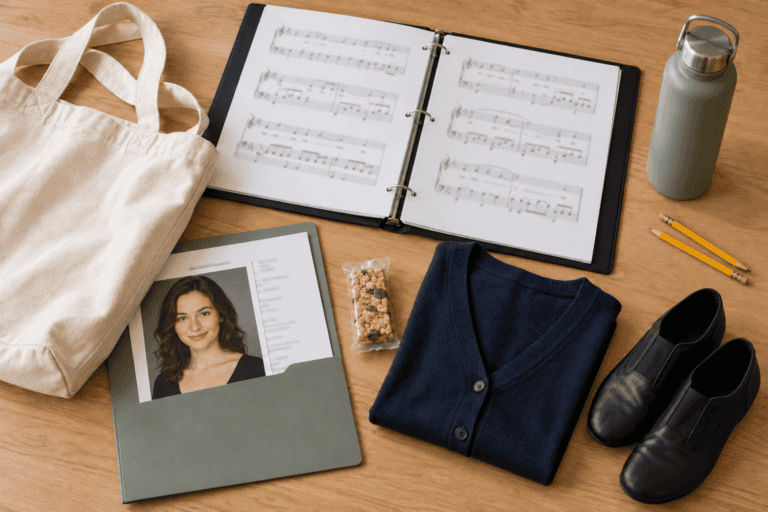
If you’ll be dancing at callbacks, wear something you can move in, along with the requested shoes. Remember to bring hair ties, if you have long hair. You can still try to suggest a character’s style (without arriving in costume).
Bring any callback music or sides you’ve been asked to bring, a pencil, water, and a small snack if it may be a long session. Keep any updated rehearsal conflicts available, too. Our guides to what to wear to a community theatre audition and what to bring to an audition cover clothing and packing in more detail.
Should you wear the same outfit to a callback as you wore to the original audition?
There’s no hard and fast rule here. I don’t think you necessarily need to wear the same exact outfit, but I would recommend going with a very similar style and not making any major changes to your appearance in the meantime.
The casting team liked what they saw from your first audition, so you should stick to what worked. Unless the callback requires you to wear something specific, wear a similar dress or the same color you wore the first time around. And if you want to wear the exact same thing, there’s nothing wrong with that either.
After callbacks
Now…we wait. And (usually) wait, and wait, and wait! It almost always takes longer than you expect for a cast list to be posted.
Sometimes theatres will tell you exactly where and when the list will be posted, or how and when you’ll be notified. Sometimes it’s less clear and you’ll find yourself clicking back and forth among the theatre’s website, their social media accounts, and your email inbox, while waiting for your phone to ring. It can be frustrating and stressful!
Try your best to take your mind off the audition. Easier said than done, but if you can distract yourself with other things, the time will go by faster.
Before you know it, you’ll get final word on whether or not you’ve been cast in the show. If you’re offered a role, respond by the deadline and express your gratitude.
If this show wasn’t in the cards for you, way to go for trying! Every audition and callback is a learning experience — one that will help you do better next time. Restart your audition search and start preparing for the next one!
What has surprised you at a musical theatre callback? Share a cold read experience, a dance call tip, or something you wish you’d known before your first callback in the comments.