Sweeney Todd: The Complete Musical & Audition Guide
Sweeney Todd: The Demon Barber of Fleet Street follows a barber who returns to London seeking revenge and joins forces with Mrs. Lovett, the owner of a failing pie shop. Their gruesome solution to disposing of his victims becomes a booming business, and Sondheim’s music makes the whole scheme thrilling—and surprisingly funny—to watch unfold.
This guide covers the standard full-length stage version licensed for U.S. community theatre. The School Edition is a separate adaptation. Here you’ll find the characters, song sequence, audition priorities, and production demands that matter when a theatre takes on the full show.
Sweeney Todd at a Glance
| Book | Hugh Wheeler |
| Music and lyrics | Stephen Sondheim |
| Based on | Christopher Bond’s 1973 play, drawing on the older Sweeney Todd story |
| Broadway opening | March 1, 1979; 557 performances |
| Setting | Nineteenth-century London |
| Structure / content | Two acts; MTI rates the full version R. Murder, cannibalism, sexual violence in the backstory, and abuse of power are central to the story. |
| Cast | Ten named roles plus ensemble; MTI describes a flexible medium cast of 11–20. |
| Musical style | Dark musical thriller with a demanding, largely sung score and substantial choral writing |
| Dance / movement | Little formal dance; ensemble staging, violence, and busy scene changes |
| U.S. licensing | Music Theatre International (MTI) |
| Music resources | MTI lists a standard orchestration and complimentary sound effects. Ask MTI about any alternate orchestration or other requested resources. |
Sweeney Todd Synopsis
Years after being transported on a false charge, barber Benjamin Barker returns to London with a young sailor, Anthony Hope. Calling himself Sweeney Todd, he learns from Mrs. Lovett that Judge Turpin coveted his wife, Lucy, and took custody of their daughter, Johanna. Lovett says Lucy poisoned herself. She has kept Barker’s old razors, and Todd takes back both his tools and his plan for revenge.
Johanna lives under the Judge’s control. Anthony sees her at a window, falls in love, and starts looking for a way to free her. Todd reopens his barbershop above Lovett’s shop. His public contest with a rival barber, Pirelli, attracts the attention of the Judge’s attendant, the Beadle. Pirelli later recognizes Todd as Barker and tries to blackmail him; Todd kills him.
Anthony’s rescue plan brings the Judge to Todd’s chair, but Anthony bursts in at the worst possible moment. The Judge escapes, and Todd laments his lost opportunity. Lovett proposes turning future victims into filling for her pies.
By Act Two, the once-empty shop is thriving while Todd kills customers upstairs. A Beggar Woman continues to appear and claim that evil and mischief is being done at the pie shop.
Tobias, Pirelli’s young former assistant, has become devoted to Lovett. He grows suspicious of Todd and recognizes Pirelli’s purse. Lovett locks him in the bakehouse, where he discovers what the pies contain. Meanwhile, the Judge has placed Johanna in an asylum after she refuses to marry him. Anthony helps her escape, and the released inmates flood the streets.
Todd finally lures the Judge back to his shop, under the guise of reuniting him with Johanna. The Beggar Woman shows up just before the Judge, and Todd kills her, to get her out of the way of his plan. When the Judge shows up, Todd is finally able to exact his revenge.
Hearing a scream from Mrs. Lovett, Todd rushes to the bakehouse, where he sees the Beggar Woman’s face clearly: she is his Lucy. Todd throws Lovett into the oven and mourns Lucy, before Tobias emerges and kills Todd with his own razor.
Sweeney Todd Characters and Casting
The show has two dominant star parts, several major supporting roles, and a chorus that tells the story as well as populating London. The playing ages and published vocal ranges below come from MTI’s current character breakdown.
Principal Roles
| Character | Role description | Vocal / movement | Playing age |
| Sweeney Todd | Benjamin Barker returns from exile and becomes consumed by revenge against Judge Turpin. | F2–G♭4; commanding baritone/bass-baritone presence, sustained singing, little formal dance. | 40–55 |
| Mrs. Lovett | Quick-thinking pie-shop owner who helps Todd kill and conceal his victims while imagining a life with him. | G3–E5; character mezzo range, rapid comic text, constant stage activity. | 35–50 |
| Anthony Hope | Young sailor whose love for Johanna gives the story its hopeful counterpoint. | B♭2–F4; lyrical singing, light movement, convincing urgency. | 20–30 |
| Johanna | Todd’s daughter, confined by the Judge and determined to escape. Her “yellow hair” is referenced often and becomes a plot point later in the show. | B♭3–A5; legit soprano line, light movement, emotional presence despite long stretches apart from the main action. | 18–21 |
| Tobias Ragg | Pirelli’s assistant, who later helps Mrs. Lovett and grows suspicious of Todd. Although written as a boy, some stage productions cast an adult and portray Toby as a young man with an intellectual disability. | B♭2–A♭4; youthful voice, direct storytelling, some movement as he promotes Pirelli and, later, Mrs. Lovett’s pie shop. | 12–18 |
| Judge Turpin | Corrupt judge who exiled Barker and keeps Johanna under his control. | E2–G♭4; low male voice, controlled menace, little dance. | 50–65 |
| The Beadle | Turpin’s officious attendant; his cheerful manner sits beside his cruelty. | D3–D5; high male range, nimble character singing and precise comic timing. | 40–55 |
| Beggar Woman | A vulnerable woman who repeatedly approaches the pie shop and holds the story’s crucial secret. | A♭3–F5; expressive singing and physical characterization, with quick shifts in clarity and mood. | 35–50 |
| Adolfo Pirelli | Showy rival barber who recognizes Todd’s former identity. | B2–C5; high, agile male range, comic bravado and a performed Italian persona. | 30–45 |
Featured Roles and Ensemble
| Character / track | Role description | Vocal / movement | Playing age |
| Jonas Fogg | Owner of the asylum where the Judge confines Johanna. | Small featured acting part, likely cast with an actor from the ensemble. | 35–60 |
| Townspeople / customers | Londoners, market crowd, and the customers who make Lovett’s shop a success. | Strong ensemble singing and clear storytelling; some movement and quick changes. | Adults; varied |
| Policemen / asylum inmates | Officials and the people released during “City on Fire.” | Chorus singing and tightly rehearsed physical staging; any doubling depends on the production. | Adults; varied |
Sweeney Todd Song List
These are the main numbers and sequences in show order. Short reprises and scene music are grouped where it helps the list stay readable.
| Song / sequence | Featured performers | What happens |
| The Ballad of Sweeney Todd | Company | Introduces the tale and returns several times to continue telling the story. |
| No Place Like London | Anthony, Todd, Beggar Woman | Anthony’s optimism meets Todd’s bitter return. |
| The Worst Pies in London / Poor Thing | Mrs. Lovett | Her woes over her failing shop lead into Barker’s family history. |
| My Friends | Todd, Mrs. Lovett | Todd reclaims his razors; Lovett draws closer. |
| Green Finch and Linnet Bird | Johanna | Johanna sings from captivity. |
| Ah, Miss / Johanna | Anthony, Beggar Woman | Anthony sees Johanna and imagines a future with her. |
| Pirelli’s Miracle Elixir / The Contest | Tobias, Pirelli, Todd, company | A marketplace spectacle brings attention to Todd and his skill as a barber. |
| Wait | Mrs. Lovett | Lovett tries to settle Todd while he waits for revenge. |
| Kiss Me / Ladies in Their Sensitivities | Johanna, Anthony, Beadle, Judge | Two plans for Johanna’s future collide. |
| Pretty Women | Todd, Judge | Todd inches toward murder while the Judge sits in his chair. |
| Epiphany | Todd | Todd turns on all London. |
| A Little Priest | Todd, Mrs. Lovett | They turn murder into a grotesque business plan. |
| God, That’s Good! | Tobias, Mrs. Lovett, Todd, company | The pie shop booms while Todd’s killing continues. |
| Johanna (Act II sequence) | Anthony, Todd, Johanna, Beggar Woman | Anthony searches for Johanna while Todd kills. |
| By the Sea | Mrs. Lovett, Todd | Lovett pictures their future domestic bliss while Todd barely notices. |
| Not While I’m Around | Tobias, Mrs. Lovett | Tobias promises to protect her, as he begins to suspect Todd. |
| Parlour Songs | Beadle, Mrs. Lovett | The Beadle demands an inspection of the bakehouse, and Lovett detains him. |
| City on Fire | Asylum inmates, Johanna, Anthony, company | The asylum breakout sends London into chaos. |
| Searching / Final Sequence | Todd, Lovett, and company | Todd gets his final revenge with a series of kills, then confronts what he’s done. |
| The Ballad of Sweeney Todd (reprise) | Company | The chorus reinforces the story’s warning. |
Auditioning for Sweeney Todd
- Act the scene. Know who you’re singing to and what you want, even in a solo.
- Let the jokes land. For Lovett or Pirelli, trust the words and timing; extra mugging gets in the way.
- Sing with others. At an ensemble callback, hold your part and listen to the other singers.
- Choose the right song. Pick a story-driven song in your range. It doesn’t need to sound frightening. Johanna hopefuls can start with our audition songs for sopranos, and Mrs. Lovett hopefuls with our picks for altos.
Need an audition song for Sweeney Todd?
Get some divine help. See our picks for every major character or track, or let the Audition Song Finder match you with songs based on your role, voice, age, and style.
Producing Sweeney Todd in Community Theatre
Music and Sound
Sweeney Todd’s complex Sondheim score requires a lot of preparation. In my production, we had a music director for the leads and a secondary music director who just worked with the ensemble. The show requires skilled singers who can hold a part. If you’re using a live band, you’ll want plenty of rehearsal time with the entire company.
Staging and Effects
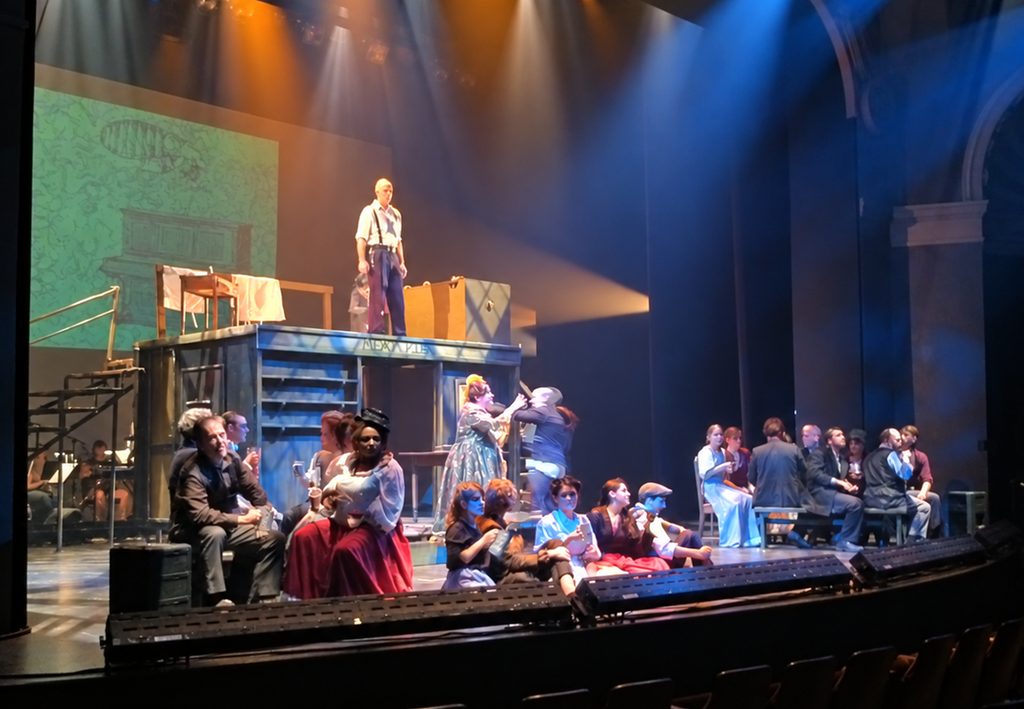
This show definitely has some advanced elements that can be tricky to pull off — most notably the chair, which traditionally transforms into the top of a chute that drops off the victim in the bakehouse below. If you’re going to attempt this, you’ll need some skilled set designers and to implement some real safety precautions.
The razor and blood effect is another thing for the production team to figure out. Some productions do a more stylized version of the deaths, with victims producing a red scarf to signify their blood, while other productions utilize a razor where the handle is basically a squeeze bottle that can squirt red liquid onto the victim’s neck, giving the illusion of the neck being cut.
If you’ve never handled these kinds of effects before, consider reaching out to another theatre that has produced Sweeney Todd, to get their help and guidance. They may even have old props or set pieces you could borrow.
Casting and Rehearsal
This show requires very strong leads who can handle the complex music and difficult subject matter, not to mention being able to perform lines and music while dealing with all the special effects.
Look for experienced performers to handle the main roles and a dedicated ensemble that will help bring the story to life. Get a solid production team to help with the set, props, and costumes, and give yourself plenty of time to pull everything together.
Is Sweeney Todd a Good Choice for Community Theatre?
Maybe. There’s no doubt that Sweeney Todd is a challenging show. But, if you have the leads, chorus, music team, and rehearsal time, go for it! There is some flexibility. You can opt for a simpler set, a smaller ensemble, and really lean on your leads to make the show shine.
As I write this, my 15-year-old daughter is currently in rehearsals for Sweeney Todd, with a teen group! They are doing the school edition, but there are not many changes from the full adult version. It’s a very talented group of teens, and I’m excited to see them perform.
Make sure you include a content warning for your audience — let them know this is probably not a show to bring small children!

Sweeney Todd is a masterpiece of theatre and it’s thrilling to see community theatres take on the challenge. We really enjoyed working on our production back in 2011, and it’s fun to see our daughter experiencing the show now. It’s one of the few dark humor musicals that can fill a niche and be different from everything else in your season, so don’t be afraid!